


In the Age of AI, Who’s in Charge?
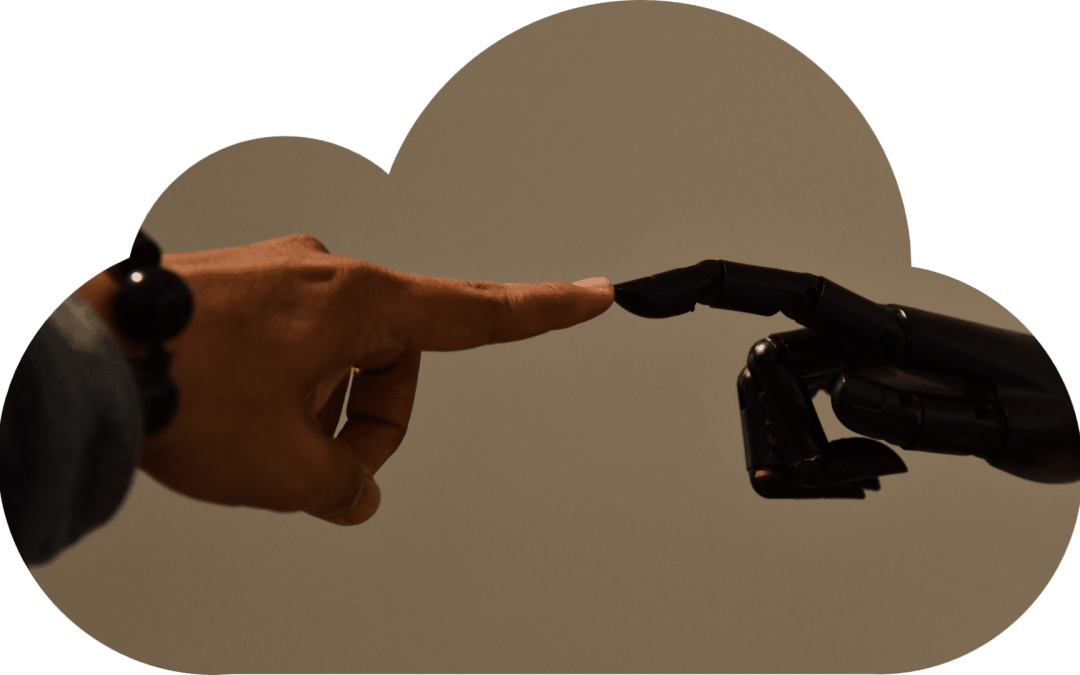
AI in the workplace was never meant to be a replacement for human judgement. Tools such as Microsoft 365 Copilot can help us move faster: creating a first draft, summarising information, structuring ideas, comparing options or getting past the blank page. Used well, AI is an enabler and gives people a starting point.
Yet a concerning behaviour is beginning to emerge. Instead of treating AI output as something to interrogate, adapt and improve, too many people are treating it as “the truth”. A suggested answer from an AI tool can quickly become the answer.
This is now showing up in the research. The Trust, attitudes and use of artificial intelligence: A global study (2025), led by the University of Melbourne in collaboration with KPMG, surveyed more than 48,000 people across 47 countries and found that many employees rely on AI output without evaluating its accuracy. It also reported that more than half of employees had made mistakes in their work because of AI. Similarly, research published by the American Psychological Association (2026) found that people using AI for simulated work tasks could become more passive in their own reasoning: 58% of participants agreed that AI “did most of the thinking”, and those participants reported lower confidence in their independent reasoning and less ownership of their ideas.
This is not a technology problem as much as it is a business behaviour problem. AI tools are designed to accelerate thinking, but they can also make it easier to outsource thinking. When that happens, productivity gains are replaced by a quieter risk: people stop applying the very judgement, experience and context they were hired to bring.
The false comfort of an unbiased machine
Part of the issue is that people often trust AI more than they trust themselves. Human judgement can feel partial, subjective or biased. AI, by contrast, can appear neutral: it is polished, fast and assured. But that confidence is not the same as correctness, and neutrality should not be assumed simply because a response was machine-generated.
In reality, every AI response is shaped by the data, prompts, permissions, model behaviour and context available to it. It may be useful, but it is not inherently wise. It may be quick, but it is not accountable. It may surface patterns, but it cannot understand the commercial, cultural or ethical implications of a decision in the same way an experienced person can.
That matters because the purpose of many roles is not simply to produce more content or process more information. It is to apply judgement. A consultant, manager, salesperson, marketer, analyst or executive is paid to interpret context, weigh trade-offs, understand nuance and decide what matters. If AI removes the friction from creating outputs but also removes the discipline of critical evaluation, businesses will not become smarter. They will simply become faster at producing work that no one has properly thought through.
AI should increase agency, not reduce accountability
The Work Trend Index report (2026) makes this point clearly. Microsoft describes a future of work in which, as AI agents take on more execution, humans should have more room to direct work, make decisions and own outcomes. Its research also positions human agency as the competitive advantage: AI may expand what people can do, but the value comes when people apply judgement, clarity of intent, quality control and critical thinking to the work AI helps produce.
Organisations have to make critical review part of the operating model and socialise this more deliberately, rather than hoping for an informal understanding. AI is not there to remove responsibility from people. It is there to expand their capacity. If an AI agent drafts a document, analyses a dataset or suggests a client response, a person still needs to ask: Is this true? Is this complete? Is this appropriate? Does it reflect our standards, our strategy and our experience?
Digital labour should create space for higher-value work
The Connect AI report (2026) talks about AI providing digital labour: capability that can take on repeatable, time-consuming or execution-heavy work so that people can focus on more complex, strategic activity. This is the productivity promise that leaders are rightly excited about. AI can reduce the drag of administration, accelerate research and help teams move from blank page to better thinking faster.
But digital labour only creates value if human labour moves up the value chain. If people use AI to avoid thinking, rather than to enable better thinking, the organisation does not become more strategic and it becomes more dependent, increasing the potential downside of an AI investment.
A good AI culture is not one where everyone uses AI all the time but one where people know how to use it proportionately, transparently and critically.
The KPI problem: measuring the wrong thing
One reason AI adoption can drift in the wrong direction is that businesses often measure activity before they measure value. They track usage, prompt volumes, licence activation or time saved. These are useful indicators, but they are not enough. High usage does not mean good judgement. Faster output does not mean better outcomes. More automation does not always mean more progress.
If businesses want AI to increase productivity in a meaningful way, they need the right KPIs for AI agents and AI-enabled work. Those KPIs should reflect the outcomes the organisation wants to improve, not just the amount of AI being used. An innovation KPI model can help by measuring whether AI is creating new ideas, improving ways of working, reducing friction or enabling teams to tackle work they could not previously prioritise.
An outcomes-based KPI model can also work. Instead of asking whether an agent was used, businesses can ask whether it improved quality, speed, revenue, customer experience, decision-making or risk management. In this model, AI is assessed in a broader system of work.
So, who is in charge?
The answer has to be people. AI can draft, summarise, suggest and execute, but people must still set direction, challenge assumptions and own the final decision. The risk is not that AI becomes too capable. The risk is that organisations allow people to become too passive.
For AI to deliver on its productivity promise, businesses need to socialise its proper use with the same seriousness they apply to governance, security and performance. They need to make clear that AI output is a contribution not a conclusion and reward the human behaviours that make AI valuable: curiosity, scepticism, judgement, creativity and accountability.
The businesses that get this right will not simply be the ones with the most AI agents. They will be the ones that are best meeting their organisational KPIs using AI, outstripping their competition.

Introducing Audience Manager: Targeted Comms, Governed Securely

Your next read:
If you liked this post, be sure to read Suzy’s post on Audience Manager, our latest innovation for Site Builder that delivers targeted comms whilst remaining securely governed.